
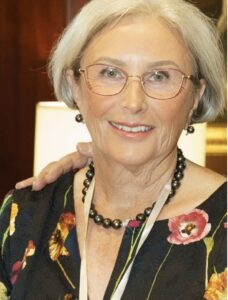
“Mental health affects all of us. It can be something we experience personally, or it can impact us as we see loved ones, our schools and communities struggle with behavioral health challenges. My family was no exception. I was diagnosed with clinical depression several years ago. But, I was lucky to find help. With the help of medication and talk therapy, I became healthy again, and I’ve been able to live my life to the fullest ever since.
That help is not available to everybody. Each of us can play a role in supporting mental health by sharing, by showing empathy and by advocating for the cause. I’m here not as an expert or clinician, but someone who believes deeply in the power of support, community, empathy, and access. Salem Hospital’s vital behavioral health programs are a very personal cause that is important to me because it’s important to the North Shore region which holds a special place in my heart. I hope the community will join me in supporting the hospital’s efforts to the fullest.” – Rose-Marie Van Otterloo

“I became interested and decided to focus on child psychiatry while raising my own child. As a parent, I was driven by a desire to better understand how to support my child’s growth and well-being. That experience sparked a deeper curiosity about how children develop and what helps them thrive. My interest was also shaped by my mother’s early life—she spent part of her childhood in an orphanage, and that time in an institutional setting had a lasting impact on her development and the person she became. These personal experiences have deeply influenced my commitment to understanding and supporting children’s mental health.” – Jeff Prince, M.D.
Meet Patient M
When Patient M was 16 years old, they spent two months at Salem Hospital, where Jefferson B. Prince, MD provided compassionate care to navigate their behavioral health challenges. After being discharged from two other previous facilities with unsuccessful treatment, Salem Hospital felt like the last resort. Dr. Prince and the Salem team helped make sure they had everything they needed and stepped in during a crisis moment.

“The (child and adolescent psychiatry) team at Salem Hospital really listened to me and went above and beyond,” Patient M says. “Dr. Prince helped me better express my needs, so I got the best long-term placement possible. The staff also helped me when I was struggling — they told me stories, did origami with me and made my room feel more like home by allowing me to decorate with origami, artwork and letters from loved ones. When I left, they let me put up some of my origami in the hallways to brighten the space for future patients.”
Patient M was also able to complete high school coursework during their stay in Epstein 2, which hadn’t been an option at other facilities. They never felt rushed out of Salem, they say, and felt safe there. They now live on their own in Texas, taking college classes to earn their degree in bioethics and working as a home health caregiver and a LEGO Robotics teaching assistant.
“My time at Salem marked a starting point where my medications were revised and I was able to learn different coping skills,” Patient M says. “I have a bright future now where my past isn’t holding me back, thanks in part to what Salem Hospital did for me.”
Jennifer Goetz, MD

Years ago, during her psychiatry training at Massachusetts General Hospital, Jennifer Goetz, MD, became an expert in identifying the symptoms of depression in her pediatric patients. But there was one patient whose symptoms she continually denied could add up to depression: herself. “The lack of energy, the loss of joy, the insomnia, the weight loss, the guilty, burdensome feelings, and the sheer loss of sense of hope and purpose — I had become a shell of my former self,” Dr. Goetz says. “Literally every ounce of my energy went into just doing my job and putting on a facade so that no one would see how bad it really was.” Fortunately, she was surrounded by caring colleagues, clinicians, family and friends who were there when the façade finally fell apart, who helped her find what she needed begin her recovery. Thanks to psychotherapy, medications and support from loved ones, Dr. Goetz has found healing from the wounds of depression. She now draws on her personal experience in how she treats child and adolescent psychiatry patients — particularly those with eating disorders — at Salem Hospital. “Sitting with patients with complex psychiatric and medical issues is part of my daily practice as a child and adolescent psychiatrist,” Dr. Goetz says. “It is in sitting with patients, in listening to their stories that their strengths become apparent. And in those strengths live hope, perhaps one of the most powerful things we can provide for our patients, especially when they are unable to hold hope for themselves. “Holding hope has become one of the most important parts of my job,” she adds. “It allows me to connect with patients beyond their illness, beyond its treatment, beyond the borders of disease and beyond the label of doctor and patient.”
Rob DiGiammarino, PsyD

When I was a child, my teacher gave us an “All About Me” assignment. One prompt asked what we wanted to be when we grew up. I raised my hand and asked, “How do you spell ‘psychologist’?” I didn’t fully understand what the word meant—only that psychologists helped people. That idea stuck with me.
As I grew older, I came to understand the depth and power of mental health work and fell in love with the field. What drew me to pediatric mental health was the realization that working with children offers a profound opportunity: the chance to shape the trajectory of a life. Supporting a young person during their most vulnerable moments can restore hope and transform their future. There is no greater impact than helping a child feel seen, understood, and resilient
Mister Rogers once said that when scary things happen, his mother told him, “Look for the helpers. You will always find people who are helping.” That wisdom stayed with me. I chose this field to be one of those helpers—a steady, compassionate presence for families in need.